

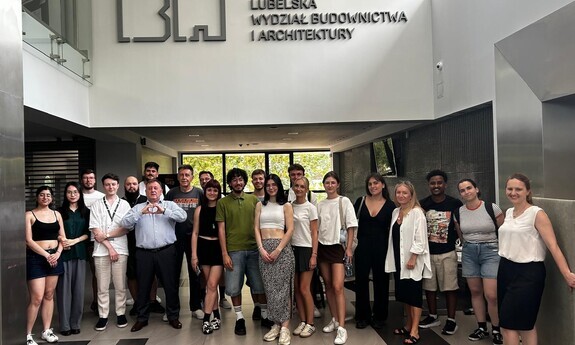
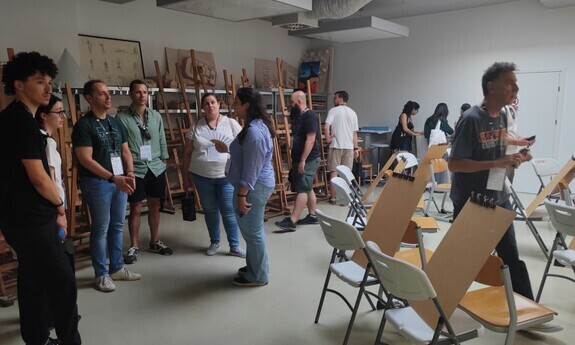
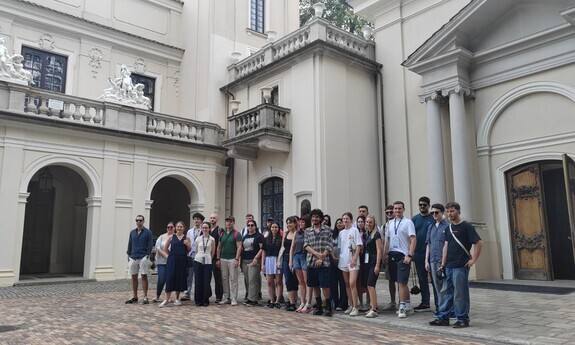
From 29 June to 3 July 2026, the on-campus phase of the international Blended Intensive Programme (BIP) ‘Public Spaces for Climate Changes’, implemented within the Erasmus+, took place. BIP was coordinated by Lublin University of Technology in collaboration with universities in Italy (Università Iuav di Venezia), Portugal (University of Beira Interior), Greece (University of Ioannina) and Slovakia (University of Žilina). The programme was designed for students of architecture and related disciplines who are interested in designing public spaces that are resilient to the effects of climate change. Participants were awarded 3 ECTS credits upon successful completion of the programme.
The programme addressed key challenges related to climate change in urban environments, including the design of resilient public spaces, green and blue infrastructure, nature-based solutions, and examples of best practice from around the world. A key strength of the programme was its international and interdisciplinary character, which fostered collaboration and knowledge exchange among students and academic staff from partner universities. By combining theoretical knowledge with practical project work, the programme helped participants develop both technical competences and essential transferable skills, including teamwork, communication, creative thinking and problem-solving.
To ensure balance between theoretical learning and practical application, the programme was delivered in two phases. The first phase comprised a three-week virtual component, during which participants took part in online lectures, seminars and workshops. Participants also gained hands-on experience with specialist tools such as ENVI-Met, SCALGO and GIS, used to analyse and design urban spaces. As part of their independent work, they prepared sketches, visual analyses and short films presenting adaptation solutions.
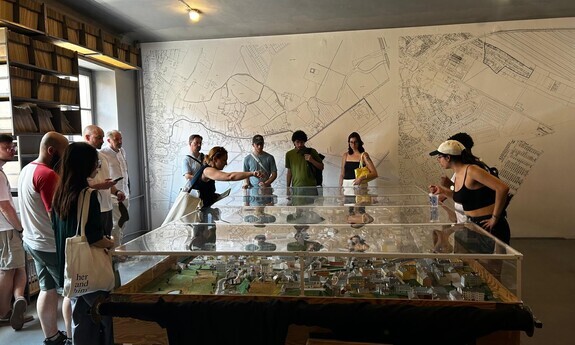
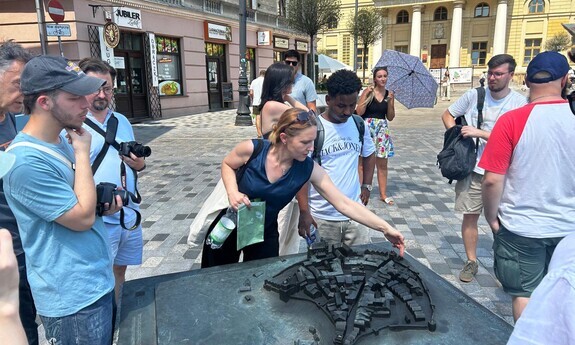
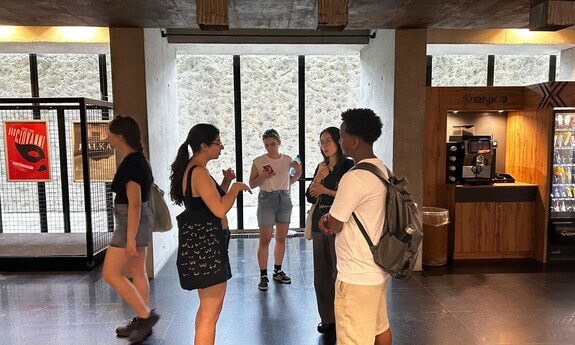
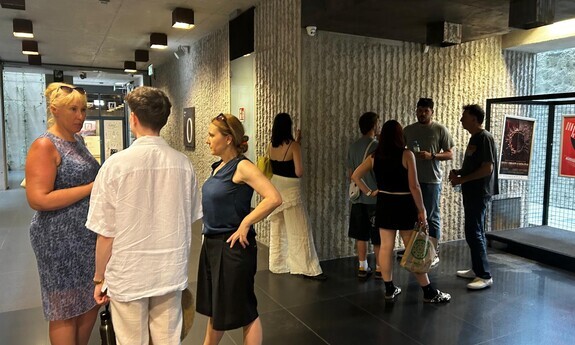
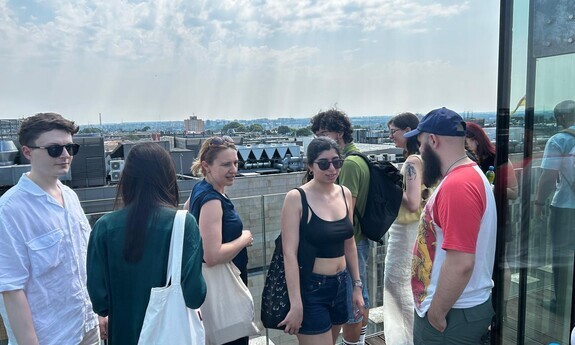
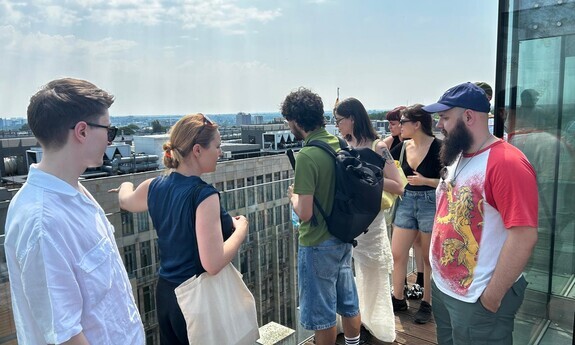
During the second phase, held in Lublin, participants carried out field analyses and studies of selected public spaces. As part of their study visits, they visited Plac Litewski, the Old Town, Błonia pod Zamkiem, the Saxon Garden and the site of the former Lublin Sugar Factory, analysing the urban planning and landscape solutions employed there.
The implementation of the project, based on problem-based learning and learning by doing, enabled participants to combine theoretical knowledge with practical project work. This resulted not only in innovative design concepts addressing contemporary climate adaptation challenges, but also strengthened participants' professional and intercultural competences while promoting the exchange of knowledge and experience between partner universities.
Material: BIP organizing Team

Projekt współfinansowany ze środków Unii Europejskiej w ramach Europejskiego Funduszu Społecznego, Program Operacyjny Wiedza Edukacja Rozwój 2014-2020 "PL2022 - Zintegrowany Program Rozwoju Politechniki Lubelskiej" POWR.03.05.00-00-Z036/17

Sfinansowane ze środków UE. Wyrażone poglądy i opinie są jedynie opiniami autora lub autorów i niekoniecznie odzwierciedlają poglądy i opinie Unii Europejskiej lub Fundacji Rozwoju Systemu Edukacji. Unia Europejska ani Fundacja Rozwoju Systemu Edukacji nie ponoszą za nie odpowiedzialności.